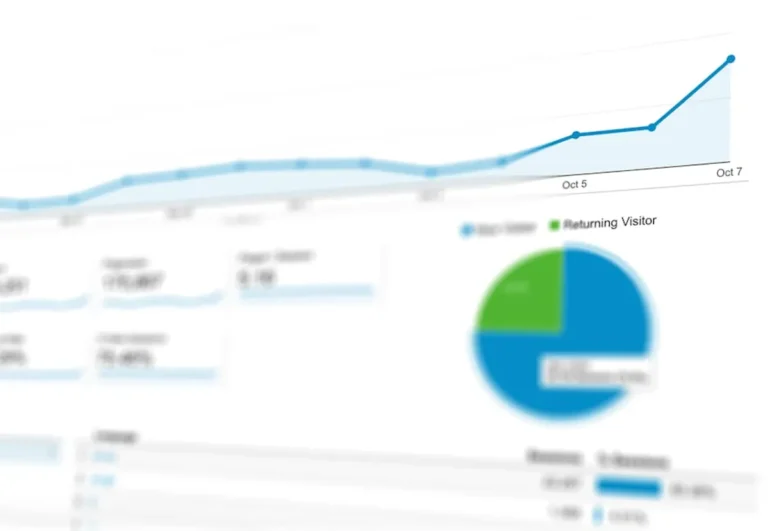
For any site owner or marketer aiming to establish a sustainable online presence, understanding where your content ranks in search engine results pages (SERPs) is not optional—it's foundational. Keyword position monitoring provides the objective data required to assess SEO efforts, identify emerging opportunities, and preempt competitive threats. For beginners, the initial setup and interpretation of this data can seem daunting, but mastering it unlocks a clear path to optimizing for visibility and, critically, for click-through rates (CTR). For beginners, mastering this process is key, and you can start with a checklist for new websites to ensure you cover all essential steps.
What is Keyword Position Monitoring?
Keyword position monitoring involves systematically tracking the organic ranking of specific keywords your website targets across major search engines. This process delivers a numerical representation of your content’s visibility for particular search queries. Instead of relying on anecdotal evidence or manual spot-checks, a monitoring system provides a consistent, data-driven view of your performance over time. It answers the fundamental question: "Where does my content appear when someone searches for [X]?" This systematic tracking differs from initial keyword discovery, highlighting the distinction between rank trackers and keyword research tools.
Why Monitor Keyword Positions?
Tracking keyword positions moves beyond mere curiosity; it informs strategic decisions that directly impact organic traffic and commercial outcomes.
Tracking SEO Performance and ROI
Position data quantifies the effectiveness of your SEO campaigns. If you invest in content creation, link building, or technical optimizations, changes in keyword rankings serve as a primary indicator of whether those efforts are yielding results. Consistent improvements in average position for target keywords suggest a positive return on your SEO investment, while declines signal areas needing immediate attention. This allows for a direct correlation between action and outcome, crucial for resource allocation.
Identifying SERP Volatility and Algorithm Shifts
Search engine algorithms are dynamic. Daily or weekly position monitoring reveals patterns of volatility. Sudden, widespread drops or gains across a cluster of keywords can indicate an algorithm update or a significant shift in the competitive landscape. Early detection allows you to analyze changes, adapt your strategy, and mitigate potential negative impacts before they significantly affect traffic and conversions.
Competitive Analysis
Monitoring your own positions in isolation provides only half the picture. Effective tools allow you to track competitor rankings for the same keywords. This reveals who is gaining ground, who is losing it, and which content strategies are succeeding in your niche. Understanding where competitors rank helps identify their strengths and weaknesses, informing your own content gap analysis and backlink acquisition strategies. For example, if a competitor consistently outranks you for high-value terms, it prompts an investigation into their content depth, authority, or user experience.
Content Strategy Refinement
Position data directly informs your content strategy. Keywords that are ranking on page two or three (positions 11-30) are often prime candidates for optimization. A small content update, internal linking push, or technical tweak can often propel these terms onto page one, significantly increasing their traffic potential. Conversely, keywords that consistently fail to rank despite optimization efforts may indicate a need to re-evaluate keyword intent, content quality, or overall topic authority.
Spotting Technical SEO Issues
Unexpected drops in rankings across a broad range of keywords can be an early warning sign of technical SEO problems. These could include issues with site crawlability, indexing, canonicalization, or mobile usability. Position monitoring acts as a diagnostic tool, prompting deeper technical audits when performance anomalies appear, preventing long-term damage to organic visibility.
Key Metrics and Data Points to Track
Beyond the raw position number, several related metrics provide critical context for effective analysis:
- Average Position: The mean ranking across all tracked keywords. Useful for a high-level performance overview.
- Position Distribution: How many keywords rank in the top 3, top 10, top 20, or beyond. This highlights the percentage of your content achieving prime visibility.
- SERP Features: Tracking whether your content (or competitors') appears in featured snippets, local packs, image carousels, or video results. These features often capture significant CTR, even if the organic position is lower.
- Search Volume: The estimated number of monthly searches for a keyword. Contextualizes position data, indicating the potential traffic impact of a ranking change.
- Estimated Traffic: An approximation of the traffic a keyword position might generate, factoring in its search volume and typical CTR for that position.
- Visibility Score: A proprietary metric offered by some tools, aggregating your overall presence in SERPs based on positions and search volumes.
Setting Up Your First Monitoring System
A structured approach ensures your monitoring efforts yield actionable insights.
Choosing Keywords to Track
Do not track every keyword you can find. Focus on those critical to your business goals:
- High-Intent Keywords: Terms directly related to your products or services, indicating a user ready to convert.
- Informational Keywords: Queries your target audience uses during the research phase, where you can build authority.
- Brand Keywords: Ensure you dominate results for your own brand name and related terms.
- Competitor Keywords: Terms where you directly compete with key players in your market.
- Long-Tail Keywords: Specific, multi-word phrases that, while lower in volume, often have higher conversion rates.
Establishing Baselines
Before making any SEO changes, record your current keyword positions. This baseline provides a reference point for measuring the impact of future optimizations. Without it, you cannot accurately attribute performance changes to specific actions.
Frequency of Checks
Daily monitoring offers the most granular data and immediate alerts for significant shifts. For beginners or smaller sites, weekly checks are often sufficient to identify trends without generating overwhelming data. Monthly reports can then aggregate these trends for strategic review.
Segmenting Data
Organize your keywords into logical groups. This could be by:
- Page/URL: Group keywords targeting a specific landing page.
- Keyword Intent: Commercial, informational, navigational.
- Product/Service Category: Relevant for e-commerce or diverse service offerings.
- Geographic Location: Essential for local SEO strategies.
Segmentation allows for targeted analysis and more precise action planning.
Pro Tip: Avoid the common beginner mistake of fixating on daily position fluctuations for individual keywords. A single-position drop or gain often represents normal SERP volatility and rarely warrants immediate action. Instead, focus on trends over weeks or months, and significant shifts across a cluster of related keywords. This prevents wasted effort on micro-optimizations that offer no real commercial gain.
Interpreting Position Data for Action
Raw data is only valuable when translated into actionable steps.
Declines: Troubleshooting and Recovery
If positions drop for a set of keywords, investigate immediately:
- Technical Audit: Check for crawl errors, indexing issues, or changes in site architecture that might affect those pages.
- Content Review: Has the content become outdated or less comprehensive than competitors? Is user engagement low?
- Backlink Profile: Have you lost valuable backlinks, or have competitors gained significant new ones?
- SERP Analysis: Has the search intent changed, or have new SERP features pushed your content down?
Prioritize recovery efforts based on keyword value and traffic impact.
Increases: Capitalizing on Momentum
When positions improve, look for ways to amplify the gains:
- Internal Linking: Add more internal links to the improving page from other relevant, high-authority pages on your site.
- Content Expansion: If a piece of content is performing well, consider expanding it, adding related sections, or creating follow-up pieces to build topical authority.
- Promotional Efforts: Share the high-ranking content more widely across social media or email newsletters to maximize traffic and engagement.
New SERP Features: Optimizing for Visibility
If you notice competitors appearing in featured snippets or other rich results, analyze their content and structure to understand how they achieved that visibility. Tailor your content with clear headings, concise answers, and structured data markup to compete for these high-CTR opportunities.
Competitive Shifts: Adjusting Strategy
If a competitor suddenly dominates a key keyword, analyze their page. What makes it superior? Is it content depth, user experience, page speed, or backlink profile? Use these insights to refine your own strategy and identify areas for improvement.
Sustaining Visibility and Growth
Keyword position monitoring is an ongoing process, not a one-time setup. Regularly review your tracked keywords, add new ones as your content evolves, and remove those that become irrelevant. The true value lies in its ability to inform a continuous cycle of analysis, optimization, and measurement. By consistently tracking your performance, understanding the nuances of SERP changes, and linking data to strategic action, you build a resilient organic presence that drives commercial value.
Frequently Asked Questions
How often should I check my keyword positions?
For most beginners, checking positions weekly provides a good balance between observing trends and avoiding overreaction to daily fluctuations. More established sites or those in highly competitive niches might benefit from daily monitoring for rapid response.
What is a "good" keyword position?
Generally, positions 1-3 on the first page of search results are considered "good" due to their significantly higher click-through rates. However, positions 4-10 are still valuable, and even lower rankings can be important for long-tail keywords or for establishing topical authority.
My keyword positions dropped. What should I do first?
First, verify the drop across multiple keywords and over a few days to ensure it's not a temporary fluctuation. Then, check for recent changes to your site (technical issues, content updates) or known search engine algorithm updates. Review competitor performance for the same terms to see if it's an industry-wide shift.
Can keyword position monitoring help with local SEO?
Yes, many monitoring tools allow you to track keyword positions for specific geographic locations. This is crucial for local businesses to understand their visibility in local search results and optimize for local packs and "near me" searches.