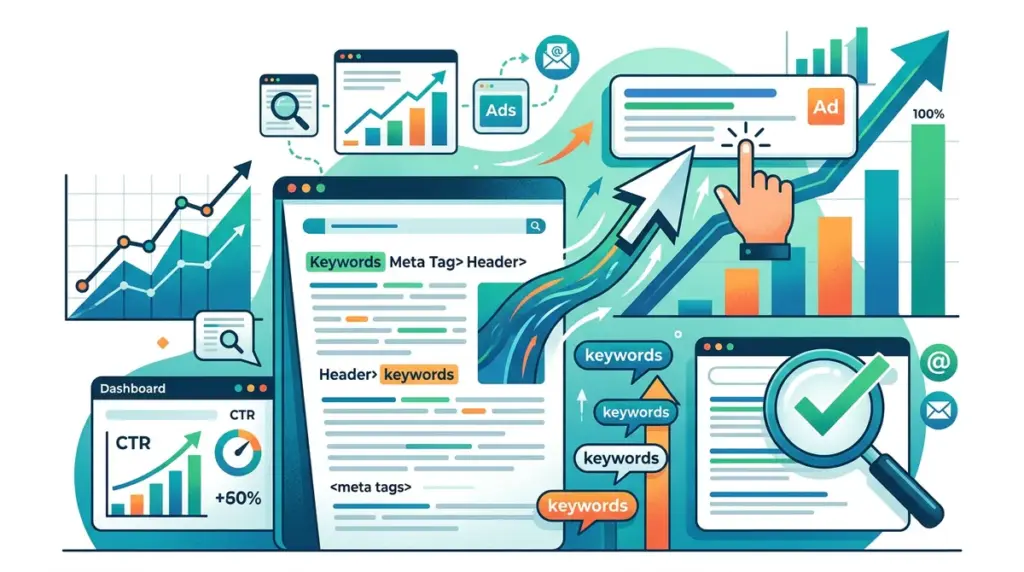
Search engine optimization often stops at the meta title and description, treating the click as the finish line. This is a tactical error. Click-through rate (CTR) is not a static metric determined solely by a snippet; it is a feedback loop fueled by the content on the destination page. When on-page content fails to immediately validate the user's search intent, the result is a "pogo-stick" bounce that signals to Google that your result—despite its catchy title—is irrelevant. High-performing content reinforces CTR by providing the structural cues and semantic relevance necessary to earn the click, maintain the session, and capture the "jump link" real estate in search results.
The Inverted Pyramid: Validating the Click in Three Seconds
The moment a user clicks, they are looking for a reason to stay. If the hero section of your page does not mirror the promise made in the SERP, the user will bounce. This immediate validation is the most critical component of long-term CTR stability. To reinforce the click, your h1 must be a logical extension of your meta title, and the opening paragraph must address the primary keyword intent directly.
Best for: Reducing bounce rates and improving "dwell time" signals that protect organic rankings.
For informational queries, use the "Answer-First" framework. Place a 40- to 60-word summary of the answer at the very top of the page. This serves a dual purpose: it confirms to the reader they are in the right place, and it provides Google with a clean block of text to pull for a Featured Snippet. When you win the snippet, your CTR often jumps from single digits to over 30%, but this is only possible if the on-page content is formatted to be "snappable."
Engineering Content for Sitelinks and Jump Links
CTR is heavily influenced by the amount of vertical real estate your listing occupies. You can force Google to expand your listing by using a structured Table of Contents with internal id attributes (jump links). When a page is clearly segmented, Google often displays these sections as "Jump to" links directly under your meta description.
- Named Anchors: Use specific, keyword-rich IDs in your HTML (e.g.,
id="how-to-calculate-ctr"instead ofid="section1"). - Semantic Subheadings: Ensure h2 and h3 tags use the exact phrasing users search for.
- Visual Hierarchy: Use bulleted lists and short paragraphs to make the content scannable for both crawlers and humans.
By providing these navigational shortcuts, you are essentially creating multiple entry points for a single URL. A user might not be interested in your general overview, but they may click a jump link for a specific "Pricing" or "Comparison" section, effectively saving a click that would have otherwise gone to a competitor.
Warning: Avoid "clickbait" meta titles that the on-page content cannot fulfill. If your SERP snippet promises a "Free Template" but the page requires a 10-field lead generation form before the download is visible, your bounce rate will spike, and Google will eventually demote your listing, regardless of your initial CTR.
Schema Markup as Content Infrastructure
On-page content must be translated into a language search engines can display. Real CTR markup is the bridge between your raw text and the "rich results" that drive higher CTR. This is not just a technical task; it is a content strategy. If you have a list of steps, use HowTo schema. If you have a list of questions, use FAQPage schema.
The FAQ schema is particularly potent for CTR reinforcement. By including 3-5 frequently asked questions at the bottom of your article and marking them up, you can occupy significantly more space on the first page of Google. This forces competitors further down the fold and provides immediate value to the user before they even visit your site. However, the content within these schemas must be concise; if the answer is too long, it won't trigger the rich result.
Maximizing Session CTR through Intent-Based Internal Linking
CTR shouldn't be limited to the search results page. Once a user is on your site, your goal is to increase "Session CTR"—the frequency with which users click through to subsequent pages. This is achieved by mapping internal links to the user's logical next step in the buyer journey.
Instead of generic "Read More" anchors, use descriptive, high-intent phrases. If a user is reading an article about "How to Improve Email Open Rates," an internal link to "10 Subject Line A/B Testing Tools" is a high-value click. This keeps the user within your ecosystem, signaling to search engines that your domain is an authoritative hub for that specific topic. High session CTR and low exit rates are strong indicators of content quality, which indirectly bolsters your primary SERP positions.
Technical Content Elements that Influence SERP Display
The physical structure of your content dictates how it is indexed and displayed. For example, using <ol> tags for sequential processes increases the likelihood of a "Listicle Snippet." Using <table> tags for data comparisons often results in a data table appearing directly in the search results. These elements are not just for readability; they are "CTR magnets" that make your listing more interactive than a standard block of text.
Furthermore, the inclusion of high-quality, original imagery with descriptive Alt Text can land your content in the "Image Pack" or the "Image Thumbnails" next to your search result. A listing with a relevant thumbnail consistently outperforms a text-only listing, especially in e-commerce and lifestyle niches.
Operationalizing Content for CTR Growth
To move from theoretical optimization to measurable growth, implement a content audit focused on these three pillars:
1. Intent Alignment: Review your top 20 pages. Does the first paragraph answer the user's primary query within 10 seconds? If not, rewrite the lead.
2. Structural Enrichment: Add a Table of Contents with jump links to any page over 1,000 words. This is the fastest way to earn "Jump to" links in the SERP.
3. Rich Result Integration: Identify pages that rank on page one but lack rich snippets. Add FAQ or HowTo schema to these pages immediately to claim more screen real estate.
CTR is a measure of trust. By aligning your on-page structure with the user's expectations, you reinforce that trust, leading to better rankings, higher engagement, and more sustainable organic traffic.
Common CTR and On-Page Questions
Does on-page content directly affect my SERP CTR?
Yes, indirectly. Google uses "Jump to" links and rich snippets derived from your on-page HTML (like h2 tags and schema) to expand your search listing. Furthermore, if your content causes users to bounce quickly, Google may lower your ranking, which reduces your overall CTR.
How long should my "Answer-First" paragraph be?
Aim for 40 to 60 words. This is the "sweet spot" that Google typically uses for Featured Snippets. It should be a concise, objective answer to the primary keyword query, placed near the top of the page.
Will adding FAQ schema to every page help my CTR?
Only if it is relevant. Google is increasingly selective about which sites get FAQ rich results. Focus on pages where the questions are genuinely helpful and directly related to the search intent. Over-optimizing with irrelevant FAQs can lead to a manual action or simply be ignored by the algorithm.