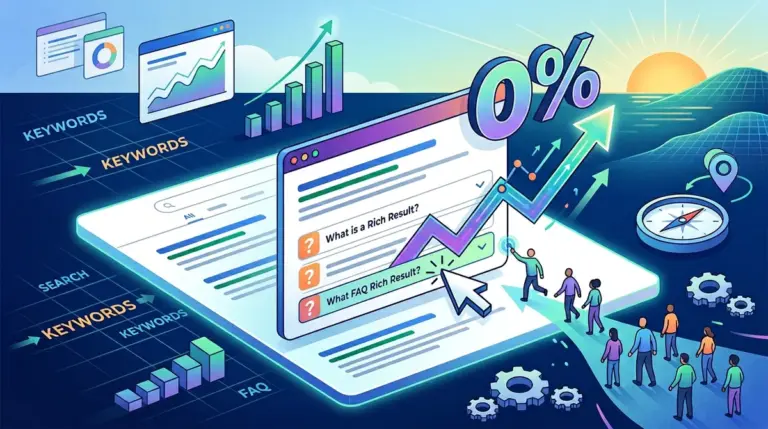
Google’s AI Overviews (AIO) represent the most aggressive visual reordering of the Search Engine Results Page (SERP) since the introduction of the Featured Snippet. For SEO professionals and site owners, the primary concern is no longer just ranking; it is the physical displacement of organic listings. When an AI-generated summary occupies the top 800 to 1,200 pixels of a mobile screen, the traditional "Position 1" is effectively pushed below the fold. This shift demands a recalibration of how we measure organic Click-Through Rate (CTR) and how we value specific types of search traffic.
The Vertical Displacement of the "Blue Link" Era
The immediate impact of AI Overviews is the dramatic increase in "pixel depth" required to reach organic results. In a pre-AIO environment, a user could see the top three organic results without scrolling. Today, a comprehensive AI response—often accompanied by a carousel of source links—forces the user to engage in significant vertical scrolling before encountering the first standard organic listing. This creates a "winner-takes-all" scenario for the AI carousel itself, while simultaneously depressing the CTR of the top 10 results.
Best for: Sites relying on high-volume informational keywords where the user intent is satisfied by a 150-word summary.
Data from early AIO rollouts suggests that informational queries—those starting with "how to," "what is," or "why"—see the sharpest decline in organic CTR. When Google provides the answer directly, the incentive to click through to a third-party site vanishes. This is the evolution of the zero-click search. However, for complex queries requiring deep expertise or multi-step instructions, the AIO acts as a gateway rather than a destination, potentially filtering for higher-quality, high-intent traffic even if total volume drops.
Informational Cannibalization vs. Transactional Resilience
Not all keywords are affected equally. AI Overviews are currently most prevalent in informational and "YMYL" (Your Money, Your Life) categories where Google can aggregate consensus. Transactional queries—where users are looking to buy a specific product or compare prices—retain a more traditional layout because the user’s goal is to leave the SERP and enter a checkout flow.
- Informational Queries: High risk of CTR collapse (30-60% estimated drop) as the AIO provides the "quick answer."
- Comparison Queries: Moderate risk; AIO may list top products, but users still seek the social proof and detailed reviews found on authoritative sites.
- Transactional/Navigational: Low risk; these queries often bypass AIO or trigger more commerce-focused modules like Google Shopping.
To mitigate this, SEOs must shift focus toward "un-summarizable" content. This includes proprietary data, unique case studies, and subjective editorial perspectives that an LLM cannot accurately replicate without losing the nuance that the user is seeking.
The New Click-Through Metric: The AIO Carousel
While AIO threatens traditional links, it introduces a new organic opportunity: the citation carousel. Being featured as a source within the AI Overview is the new "Position Zero." Early analysis indicates that the CTR for links within the AIO carousel varies wildly based on their position within the horizontal scroll. The first two cards in the carousel capture the majority of the attention, while cards hidden behind a "show more" toggle see negligible traffic.
Pro Tip: To increase the likelihood of appearing in the AIO carousel, structure your content with clear semantic headers and "entity-first" definitions. Use concise, factual sentences that the AI can easily parse and attribute to your domain.
Winning a spot in this carousel requires more than just standard keyword optimization. It requires semantic proximity—your content must be the most direct, authoritative answer to the specific sub-questions the AI is attempting to answer. If your site is cited, the CTR you receive is often more "qualified" because the user has already seen a preview of your expertise.
Optimizing for Semantic Proximity
Google’s AI models prioritize content that fills "information gaps." If the AI Overview provides a general summary, but your page offers a specific, data-backed deep dive into a niche aspect of that topic, you are more likely to be pulled in as a supporting citation. This means moving away from "ultimate guides" that cover everything superficially and moving toward granular, high-authority pages that own a specific sub-topic.
Identifying High-Risk Keywords in Your Portfolio
Publishers must audit their keyword portfolios to identify which terms are currently triggering AIOs. Tools that track SERP features are essential here. If a high-volume keyword that previously drove 20% of your traffic now triggers a massive AI block, your strategy for that page must change. You can either attempt to win the citation in the AIO or pivot the page’s metadata to target "long-tail" queries that are too specific for a general AI summary to address.
Strategies for Maintaining Traffic in an AI-First SERP
As the SERP becomes more crowded, the visual appeal of your organic snippet becomes your last line of defense. Even if you are pushed to Position 4, a highly optimized Title Tag and Meta Description that promise something the AI cannot provide—such as a downloadable template, a real-world case study, or a controversial opinion—can still win the click.
Focus on "Information Gain": Google’s patents and documentation increasingly point toward "information gain" as a ranking factor. If your content is a rehash of the top 5 results, the AI will summarize it and users will ignore you. If you offer a unique data point or a primary-source interview, you provide a reason for the user to click past the AI summary.
Auditing Your CTR Strategy for the Post-AIO Landscape
The era of measuring SEO success solely through "average position" is over. A Position 1 ranking that sits beneath an AI Overview is functionally equivalent to a Position 5 ranking from three years ago. To maintain commercial viability, agencies and site owners must adopt a more sophisticated reporting framework.
First, segment your traffic by SERP layout. Compare the CTR of pages that trigger AIOs against those that do not. If you see a declining CTR despite stable rankings, you are likely losing the "battle for the fold." Second, double down on brand-heavy queries. Users who search for your brand specifically are less likely to be distracted by an AI summary and more likely to seek out your direct link. Finally, treat the AIO carousel as a high-priority target. This involves using Schema markup (specifically TechArticle, HowTo, and FAQPage) to give the AI clear hooks to grab your content.
Frequently Asked Questions
Will AI Overviews replace all informational search traffic?
Not entirely, but they will significantly reduce the "quick hit" traffic for simple factual queries. Sites that provide deep analysis, unique perspectives, or proprietary data will continue to see clicks because users will need more than a 3-sentence summary to complete their tasks.
How can I tell if an AI Overview is stealing my clicks?
Monitor your Google Search Console (GSC) data for discrepancies between "Average Position" and "Clicks." If your position remains high but your CTR drops suddenly, check the live SERP for that keyword. If an AIO is present, it is likely the cause of the cannibalization.
Does Schema markup help in getting cited in AI Overviews?
Yes. While not a guaranteed ticket into the carousel, structured data helps Google’s LLMs understand the relationship between entities on your page. Clear, structured data makes it easier for the AI to attribute specific facts or steps to your URL, increasing your chances of being used as a source.
Should I block GoogleBot-AI from my site to protect my CTR?
Generally, no. Blocking the AI crawler may prevent your site from appearing in the AIO carousel, which is currently the best way to recoup lost organic visibility. Instead of blocking the crawler, focus on making your content so valuable that a summary is insufficient for the user’s needs.